Getting Around Spain: High-Speed Trains, Flights, Driving and Private Drivers
A practical comparison of every way to travel between Spain's cities, with journey times, luggage rules and advice for families.
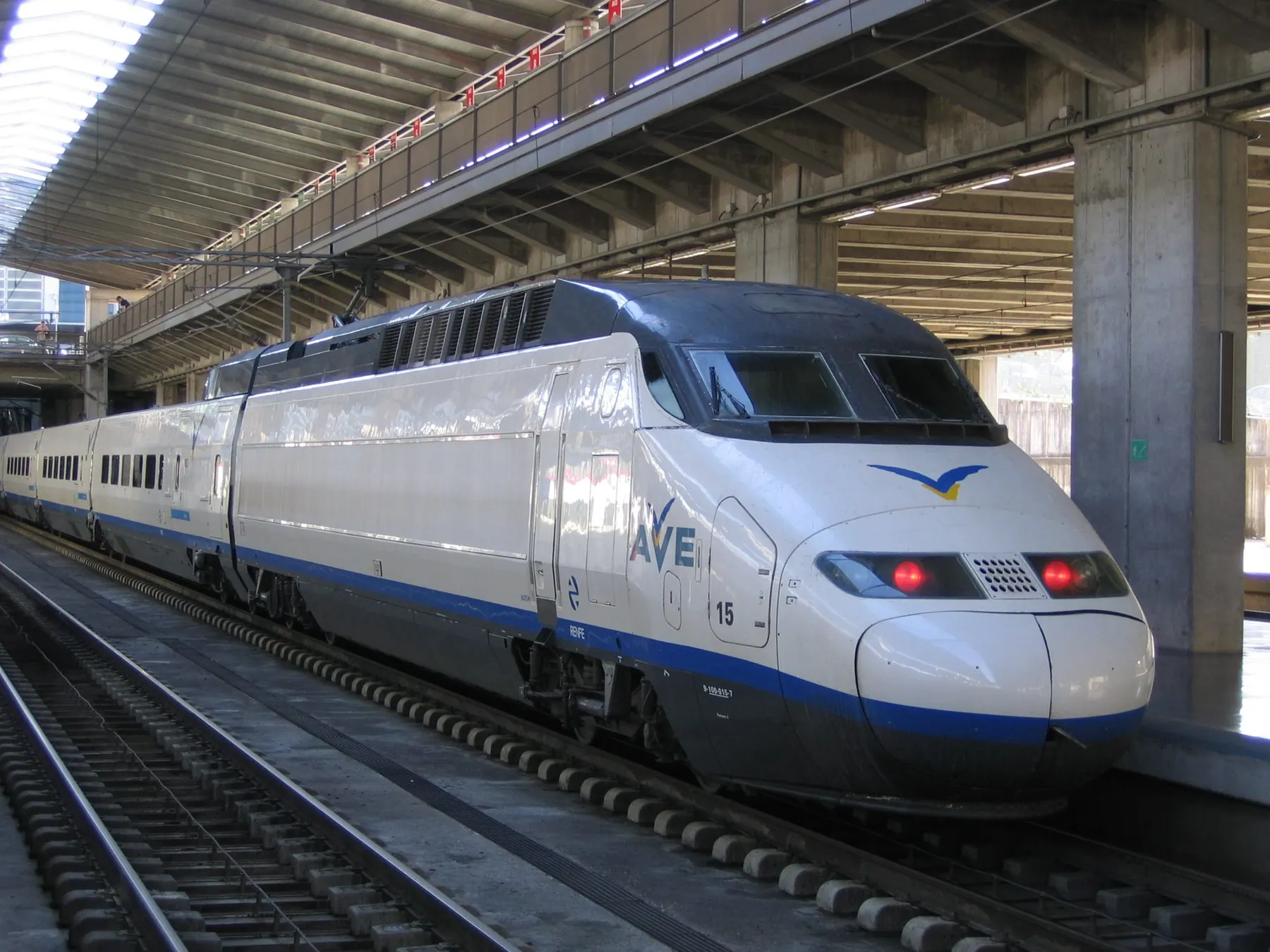
Spain is a large country by European standards, roughly twice the size of the United Kingdom, but it is remarkably well connected. Its high-speed rail network is one of the most extensive in the world, domestic flights link the mainland with the islands and distant cities, and motorways are modern and generally uncongested outside the big cities. Choosing well between train, plane, car and private driver can save hours and a great deal of effort, especially when travelling with family and luggage.
High-speed trains
High-speed trains are the backbone of travel between Spain's main cities. Three operators now compete on the busiest routes.
| Operator | What it is | Main routes | Notes |
|---|---|---|---|
| Renfe AVE and Avlo | The national operator; AVE is the standard high-speed service, Avlo its low-cost brand | The widest network: Madrid to Barcelona, Seville, Córdoba, Málaga, Granada, Valencia, Alicante, Zaragoza and more | AVE includes generous luggage; Avlo charges for larger bags |
| Iryo | Private operator | Madrid–Barcelona, Madrid–Valencia/Alicante, Madrid–Córdoba–Seville/Málaga, plus some Barcelona–Andalusia services | Several classes of comfort |
| Ouigo | Low-cost operator | Madrid–Barcelona, Madrid–Valencia/Alicante, Madrid–Córdoba–Seville/Málaga and others | Basic fares with paid extras for luggage |
Routes and frequencies change with each timetable, so check the operators' websites. Granada, for example, is served by Renfe rather than by the private operators.
What to know before boarding
- Main stations: in Madrid, Atocha (Puerta de Atocha – Almudena Grandes) serves the south and east, and Chamartín – Clara Campoamor serves the north and some other routes; always check which station your train uses. In Barcelona, most trains use Sants; in Seville, Santa Justa; in Málaga, María Zambrano; in Valencia, Joaquín Sorolla.
- Security: luggage is X-rayed before boarding at high-speed stations. Arrive 20 to 30 minutes early, more at busy times.
- Luggage: Renfe's policy for AVE and long-distance trains allows up to three pieces, with a combined maximum of 25 kg, and folded strollers count as hand luggage. Low-cost services such as Avlo include a small bag and a cabin case and charge for larger items; other operators set their own rules.
- Seats: all high-speed seats are reserved. Families can usually choose seats together when booking.
- Food: most high-speed trains have a café car or trolley service, but choices are limited; bring snacks for children.
Domestic flights
Flights are the best option for long distances that the rail network does not cover quickly, and for the islands.
- Useful routes: Barcelona to Seville, Málaga or Granada; Valencia to Seville or Málaga; any mainland city to the Balearic or Canary Islands.
- Less useful routes: Madrid to Barcelona, Seville, Córdoba or Valencia, where the train is generally faster door to door once airport transfers and security are counted.
- Airlines: Iberia, Air Europa and Vueling are the main domestic carriers, with low-cost airlines on many routes.
- Airports: Spain's airports are run by Aena. Allow time for security, and remember that low-cost fares often charge for checked bags.
Driving
Driving gives freedom in the countryside: white villages in Andalusia, the mountains around Madrid, or a coastal road trip. Spain's motorways are excellent, and many former toll motorways no longer charge tolls.
But there are trade-offs:
- Historic centres in Toledo, Granada, Seville, Córdoba and elsewhere have narrow streets and restricted-access zones with cameras; entering without authorisation can lead to fines.
- Low-emission zones apply in Madrid, Barcelona and many other cities, based on the DGT environmental label of the vehicle.
- Parking in city centres is limited and expensive.
- Licences: depending on where your licence was issued, you may need an International Driving Permit; check with your rental company before you travel.
- Child seats are mandatory for children up to 135 cm (see our family guide).
Many visitors combine approaches: train between big cities, and a car only for a day in the countryside.
Private driver
A car with driver sits between the convenience of a taxi and the freedom of a rental car, without the stress of either.
When it makes sense:
- Families with luggage: one vehicle sized for everyone, from hotel door to hotel door, with child seats requested in advance.
- Routes with stops: Seville to Granada via Córdoba, or Córdoba to Granada with a morning at Medina Azahara, impossible to combine efficiently by train.
- Day trips: Toledo, Segovia, Ávila, Montserrat or Ronda, with flexible timing and viewpoints that trains do not reach.
- Arrivals and departures: a driver waiting in the arrivals hall after a long-haul flight, or reaching a hotel deep in a pedestrianised old town by the nearest permitted route.
- Older travellers or reduced mobility: fewer stairs, platforms and transfers.
City-to-city journey times
| Route | Fastest direct train (approx.) | Flight time (approx.) | Road (approx.) |
|---|---|---|---|
| Madrid – Barcelona | 2 h 30 | 1 h 15 | 6 h (about 620 km) |
| Madrid – Valencia | 1 h 50 | Not usually worth it | 3 h 45 (about 360 km) |
| Madrid – Córdoba | 1 h 45 | Not applicable | 4 h (about 400 km) |
| Madrid – Seville | 2 h 30 | 1 h 05 | 5 h 15 (about 530 km) |
| Madrid – Málaga | 2 h 45 | 1 h 10 | 5 h 15 (about 530 km) |
| Madrid – Granada | 3 h 15 | 1 h 05 | 4 h 30 (about 420 km) |
| Madrid – Toledo | 33 min | Not applicable | 1 h (about 75 km) |
| Barcelona – Valencia | 3 h | 1 h | 3 h 45 (about 350 km) |
| Barcelona – Seville | About 5 h 30–6 h | 1 h 45 | 10 h |
| Barcelona – Málaga | About 6 h | 1 h 40 | 10 h |
| Seville – Córdoba | 45 min | Not applicable | 1 h 45 (about 140 km) |
| Córdoba – Granada | 1 h 30–1 h 50 | Not applicable | 2 h (about 200 km) |
| Seville – Granada | About 2 h 45 | Not applicable | 3 h (about 250 km) |
| Málaga – Granada | Rail connection not direct; road is simpler | Not applicable | 1 h 30 (about 130 km) |
| Málaga – Marbella | No rail link | Not applicable | 50 min (about 60 km) |
Train times are for the fastest direct services and vary by timetable; flight times exclude airport transfers and security. Check current timetables on the operators' websites before booking.
Getting around within cities
Once you arrive, Spain's cities are easy to navigate. Madrid, Barcelona, Valencia, Seville, Málaga and Bilbao have metro or tram systems, and most now accept contactless bank cards or rechargeable travel cards. Licensed taxis are plentiful and metered, with fixed or minimum fares on some airport routes. Ride-hailing apps operate in the larger cities. Historic centres are best explored on foot, so pack comfortable shoes and plan a taxi or driver for the uphill parts, such as the Albaicín in Granada or Toledo's old town.
Choosing for your group
- Couples travelling light: trains between cities, metro and taxis within them.
- Families with young children: trains for long hops, with a driver for station transfers; or a driver for the whole route in Andalusia.
- Large groups: a minivan with driver is often simpler than coordinating train seats and several taxis.
- Island add-ons: fly, and arrange a transfer on arrival.
How we help
We arrange airport transfers, a car with driver for single journeys or whole days, and complete custom programmes that combine trains and private transfers where each works best. For a ready-made route, see Andalusia in seven days or our day trips from Madrid. Share your route through the trip planner, and the team will confirm availability and price after reviewing it.
Questions readers ask
Is the train or plane better between Madrid and Barcelona?
How much luggage can I take on Spanish high-speed trains?
Do I need to book Spanish trains in advance?
Is it easy to drive in Spain?
Sources
- Renfe — official timetables and tickets
- Renfe — luggage policy
- Iryo — official site
- Ouigo España — official site
- Aena — Spanish airports
- DGT — Dirección General de Tráfico
Opening times, ticket rules and fares change. Always confirm on the official site before you travel.


