The Al-Andalus Heritage Trail: Islamic Spain from Córdoba to Zaragoza
A respectful, accurate journey through the great monuments of Al-Andalus, what each one tells us, and how to link them into a single trip.
For almost eight centuries, a large part of the Iberian Peninsula was known in Arabic as Al-Andalus. Its cities were among the largest and most cultivated in Europe; its scholars translated and commented on Greek philosophy, refined astronomy, medicine and agriculture, and wrote poetry that is still read today. The monuments they left are not ruins in a foreign land for Arab visitors: they are familiar inscriptions, recognisable geometry, and courtyards built around water and shade in the way homes from Damascus to Fez still are.
This trail links the most important of those monuments, from Córdoba and Granada to Seville, Toledo and Zaragoza. It is written to be accurate and respectful: these places carry layered histories, including Christian, Jewish and Muslim chapters, and they are understood best when all of them are acknowledged.
A short history of Al-Andalus
| Period | Dates | What happened |
|---|---|---|
| Conquest | 711–756 | Forces led by Tariq ibn Ziyad cross from North Africa; most of the peninsula comes under Umayyad rule from Damascus |
| Emirate of Córdoba | 756–929 | Abd al-Rahman I, a survivor of the Umayyad dynasty, establishes an independent emirate in Córdoba |
| Caliphate of Córdoba | 929–1031 | Abd al-Rahman III proclaims himself caliph; Córdoba becomes one of the great cities of the world |
| Taifa kingdoms | 1031–1090s | The caliphate fragments into rival kingdoms such as Seville, Toledo and Zaragoza |
| Almoravids and Almohads | 1090s–1230s | Berber dynasties from North Africa reunite Al-Andalus; Seville becomes a major Almohad capital |
| Christian advance | 1085–1248 | Toledo (1085), Zaragoza (1118), Córdoba (1236) and Seville (1248) pass to Christian kingdoms |
| Nasrid Granada | 1238–1492 | The last Muslim kingdom in Iberia, which builds the Alhambra and surrenders in January 1492 |
After 1492, Muslims who remained were at first promised religious freedom, but within a few years were forced to convert, and their descendants, the Moriscos, were expelled between 1609 and 1614. The word Mudéjar describes Muslims who lived under Christian rule, and also the architectural style they and their successors created for Christian patrons, which explains why many "Christian" buildings in Spain look unmistakably Andalusi.
1. The Mosque-Cathedral of Córdoba
Why it matters: It is the most important surviving monument of the Umayyad period in the West.
Abd al-Rahman I began the mosque in 785 on the site of an earlier church. It was enlarged by Abd al-Rahman II, by al-Hakam II, who added the magnificent mihrab and the ribbed domes in front of it, and finally by al-Mansur at the end of the tenth century, making it one of the largest mosques in the world at the time. Its forest of columns, topped by double arches striped in red brick and white stone, was designed to extend almost endlessly.
After the Christian conquest of 1236 it became a cathedral, and in the sixteenth century a Renaissance nave was built in its centre. Today it is officially the Mosque-Cathedral, an active Catholic cathedral, and Muslim prayer is not permitted inside. Visitors are asked to dress modestly and to respect the space.
Visit tips: Allow 90 minutes. Pay attention to the mihrab's gold mosaics, made with the help of a Byzantine craftsman sent from Constantinople, and to the Patio de los Naranjos, the former ablutions courtyard. Our private Córdoba: Mosque-Cathedral and Jewish Quarter can be arranged on request.
2. Medina Azahara (Madinat al-Zahra)
Why it matters: It is the palace-city of the caliphate, the clearest window onto the court of tenth-century Córdoba.
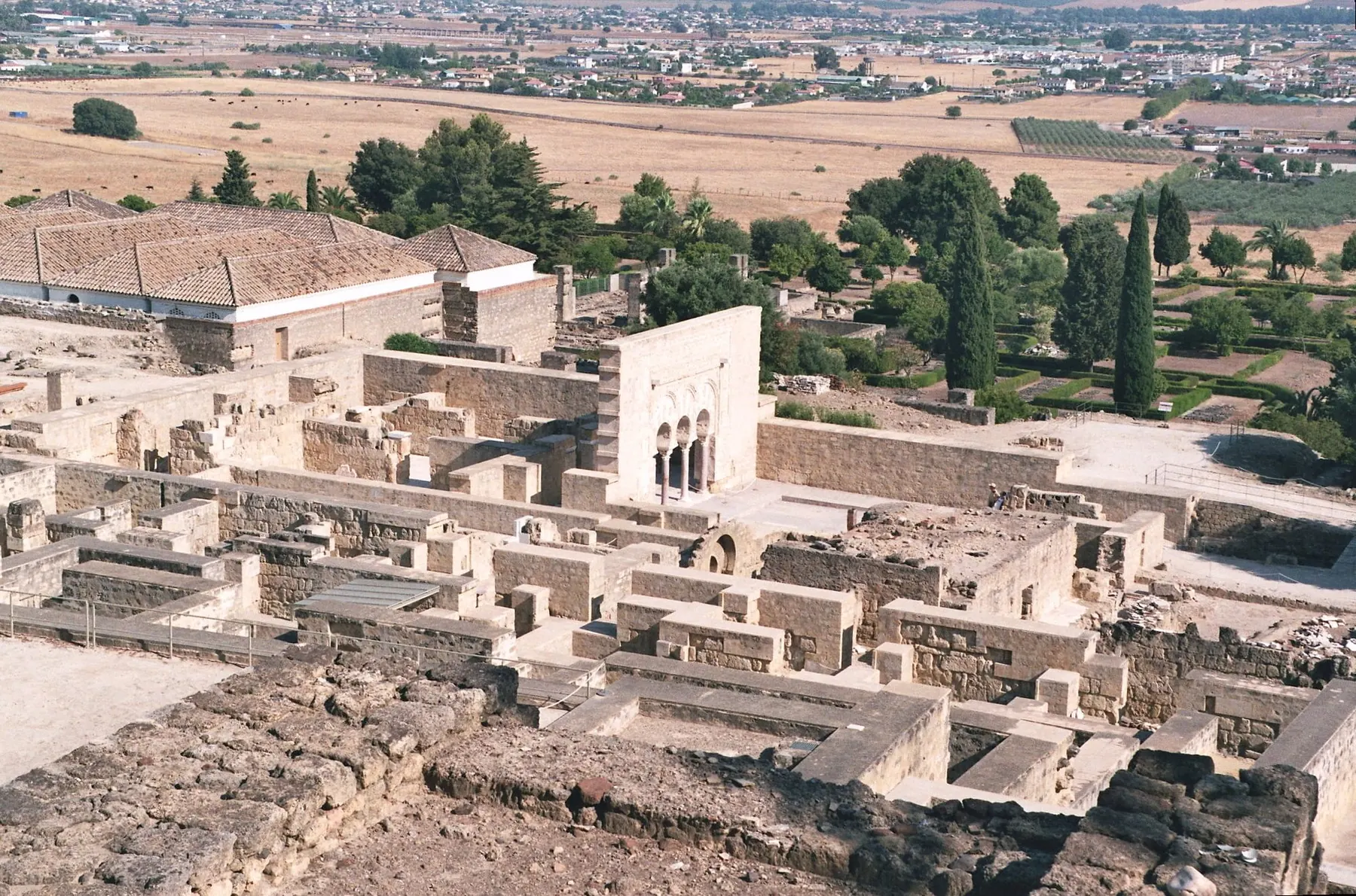
Founded by Abd al-Rahman III from around 936, Madinat al-Zahra stepped down a hillside west of Córdoba in terraces: the caliph's residence at the top, administrative halls and gardens below, then the city. It was sacked during the civil war that ended the caliphate in the early eleventh century and was gradually lost. Excavations since the early twentieth century have uncovered the Salón Rico, with its carved stone decoration, and much of the plan. It was inscribed on the UNESCO World Heritage List in 2018.
Visit tips: Start at the museum and visitor centre; a shuttle bus takes you up to the site. Allow two to three hours, and check opening days, as the site is normally closed on Mondays.
3. The Alhambra, Granada
Why it matters: It is the finest surviving palace complex of the medieval Islamic world.
The Nasrid sultans built the palaces mainly in the fourteenth century, particularly under Yusuf I and Muhammad V. The Comares Palace with the Court of the Myrtles was the official palace; the Palace of the Lions, with its fountain supported by twelve stone lions, was the private residence. The walls are covered in carved stucco and inscriptions: Qur'anic verses, poems by the court poet Ibn Zamrak, and the Nasrid motto, wa-la ghaliba illa Allah ("there is no victor but God"), repeated throughout.
Visit tips: Tickets are limited and the Nasrid Palaces are entered at a fixed time. Read our Alhambra tickets guide and consider the private Granada: Alhambra and Albaicín. Across the valley, the Albaicín keeps the street pattern of the Muslim city, and the eleventh-century Arab baths of El Bañuelo are among the best preserved in Spain.
4. The Real Alcázar of Seville
Why it matters: It shows how Andalusi art continued under Christian kings.
The Alcázar began as a fortress of the Muslim governors and was expanded under the Abbadid taifa and the Almohads; some Almohad elements, including the Patio del Yeso, survive. Its most celebrated part, the Palace of King Pedro I, was built in the 1360s by Christian commission but with craftsmen from Granada, Toledo and Seville. The result is a Mudéjar masterpiece, with Arabic inscriptions praising the king alongside Castilian heraldry. The palace is still used by the Spanish royal family when in Seville.
Visit tips: Book online and go at opening time. Allow two to three hours, including the gardens. Our private Seville: Alcázar and Santa Cruz can be arranged on request.
5. The Giralda and Seville Cathedral
Why it matters: The Giralda is the most famous minaret in Europe, a sister of the Kutubiyya in Marrakesh.
When the Almohads made Seville their capital in Al-Andalus, they built a great mosque, completed in the late twelfth century, and a minaret finished around 1198. After 1248 the mosque became a cathedral and was later replaced by the present Gothic building, but the minaret survived, topped in the sixteenth century with a Renaissance belfry. Inside, ramps rather than stairs lead to the top. The Patio de los Naranjos, once the mosque's courtyard, and the Puerta del Perdón are also Almohad.
6. Toledo
Why it matters: Toledo is where the three faiths' heritage is most closely interwoven.
Under Muslim rule, Toledo was a major city and later the capital of a taifa kingdom. Its most precious Islamic monument is the small Mosque of Cristo de la Luz, built in 999, whose brick façade still bears a Kufic inscription recording its construction; after the conquest of 1085 it became a church. Toledo's medieval synagogues, Santa María la Blanca and El Tránsito, were built with Mudéjar decoration, and in the twelfth and thirteenth centuries the city became a famous centre where Arabic works of science and philosophy were translated into Latin and Castilian.
Visit tips: Toledo is about 33 minutes by high-speed train from Madrid, or around an hour by road. See our private Toledo day trip.
7. The Aljafería, Zaragoza
Why it matters: It is the finest surviving palace of the taifa period.
Built in the second half of the eleventh century for Abu Jafar Ahmad al-Muqtadir, ruler of the taifa of Saraqusta, whose name gave the palace its own, the Aljafería centres on a courtyard with interlacing, almost lace-like arches and a small oratory with a richly decorated mihrab. After 1118 it became a palace of the kings of Aragon, and later Mudéjar and Renaissance halls were added. Today it houses the regional parliament, the Cortes de Aragón, and can be visited. The Mudéjar architecture of Aragon is inscribed by UNESCO.
Visit tips: Zaragoza lies on the high-speed line between Madrid and Barcelona, about 1 hour 20 minutes from Madrid, making it an easy stop of half a day.
Beyond the main trail
If you have more time, the Alcazaba of Málaga, the Alcazaba of Almería, the Arab baths of Ronda and Jaén, and the castle of Gibralfaro all add to the picture. In Valencia, the Water Tribunal that still meets every Thursday continues an irrigation tradition rooted in the Andalusi period.
Linking the trail into one journey
| Stage | Route | Suggested time |
|---|---|---|
| Madrid and Toledo | Day trip from Madrid | 1 day |
| Córdoba and Medina Azahara | Madrid to Córdoba by train, under 2 hours | 2 days |
| Seville | Córdoba to Seville, about 45 minutes by train | 2–3 days |
| Granada | Seville to Granada, about 3 hours by road | 2 days |
| Zaragoza (optional) | On a Madrid–Barcelona journey | Half a day |
A seven- to ten-day trip covers the core comfortably. For a detailed Andalusian route, see Andalusia in seven days.
Visiting with respect
These are places of memory for many visitors. Dress modestly in religious buildings, follow the rules of each site, and remember that guides and staff are proud of this shared heritage. If you need prayer facilities during the trip, see our guide to Muslim-friendly Spain.
We design heritage programmes across Spain on request, with a car with driver between cities and timing planned around ticketed monuments. Explore custom programmes and share your dates through the trip planner.
Questions readers ask
How long did Muslim rule last in Spain?
Can Muslims pray inside the Mosque-Cathedral of Córdoba?
How many days do I need for this trail?
Which site should I choose if I only have time for one?
Sources
- UNESCO — Historic Centre of Córdoba
- UNESCO — Caliphate City of Medina Azahara
- UNESCO — Alhambra, Generalife and Albayzín, Granada
- UNESCO — Cathedral, Alcázar and Archivo de Indias in Seville
- UNESCO — Historic City of Toledo
- UNESCO — Mudejar Architecture of Aragon
- Mezquita-Catedral de Córdoba — official site
- Patronato de la Alhambra y Generalife
- Cortes de Aragón — Palacio de la Aljafería
Opening times, ticket rules and fares change. Always confirm on the official site before you travel.