Andalusia in 7 Days: Seville, Córdoba and Granada
A calm, realistic week through the three great cities of Al-Andalus, with travel times, booking advice and room to breathe.
Andalusia rewards travellers who slow down. The three great cities of Al-Andalus, Seville, Córdoba and Granada, sit within a few hours of one another, yet each deserves time: Seville for its palaces and evenings, Córdoba for a single extraordinary building and its quiet lanes, Granada for the Alhambra and the views from the Albaicín. This seven-day route is designed for families and couples who want depth without rushing, and it works in either direction.
The route at a glance
| Day | Base | Main focus | Travel that day |
|---|---|---|---|
| 1 | Seville | Arrival, evening walk in Santa Cruz | Arrival |
| 2 | Seville | Real Alcázar, Cathedral and Giralda | On foot |
| 3 | Seville | Plaza de España, Triana, river | On foot or short rides |
| 4 | Córdoba | Mosque-Cathedral and Jewish Quarter | Seville to Córdoba: about 45 min by fast train, about 1 h 45 by road |
| 5 | Granada | Medina Azahara, then on to Granada | Córdoba to Granada: about 1 h 30–1 h 50 by train, about 2 h by road |
| 6 | Granada | The Alhambra and Generalife | On foot or short ride |
| 7 | Granada | Albaicín, Sacromonte, departure | Granada to Málaga airport: about 1 h 30 by road |
Travel times are approximate for direct services and normal traffic; check current timetables on the Renfe website before booking, as they change with each season.
Before you go: three things to fix first
- The Alhambra date. Tickets are limited and the Nasrid Palaces are entered at a fixed time printed on the ticket. Secure this first and build the rest of the week around it. Our Alhambra tickets guide explains how the system works.
- Arrival and departure airports. Seville suits arrivals from Madrid by train or direct flights; Málaga has the most international connections and is the natural exit after Granada.
- The season. From June to September, inland Andalusia is very hot. Plan visits for early morning and evening, and keep middle hours for lunch and rest. Spring and autumn are ideal.
Day 1: Arrive in Seville
Check in, rest, and keep the first evening simple. Walk through the Santa Cruz quarter as the heat fades: whitewashed lanes, tiled patios and small squares shaded by orange trees. End at the Plaza Virgen de los Reyes, where the Giralda is lit at night. If you arrive by high-speed train from Madrid (about two and a half hours), the journey itself becomes a gentle start.
Day 2: Seville's palaces and cathedral
Begin at the Real Alcázar at opening time, with tickets booked in advance on the official site. This is a royal palace still in use, whose Mudéjar halls were built for King Pedro I in the fourteenth century by craftsmen steeped in Andalusi art. Allow two to three hours, and save energy for the gardens, which are among the loveliest in Spain.
After lunch and a rest, visit Seville Cathedral, built on the site of the great Almohad mosque. Its Giralda tower began life as the mosque's minaret in the twelfth century; the climb uses ramps rather than stairs, wide enough, it is said, for a rider on horseback. The Patio de los Naranjos, once the mosque's ablutions courtyard, still keeps its orange trees.
Our private Seville: Alcázar and Santa Cruz covers this day with a driver and flexible pacing.
Day 3: Plaza de España, Triana and the river
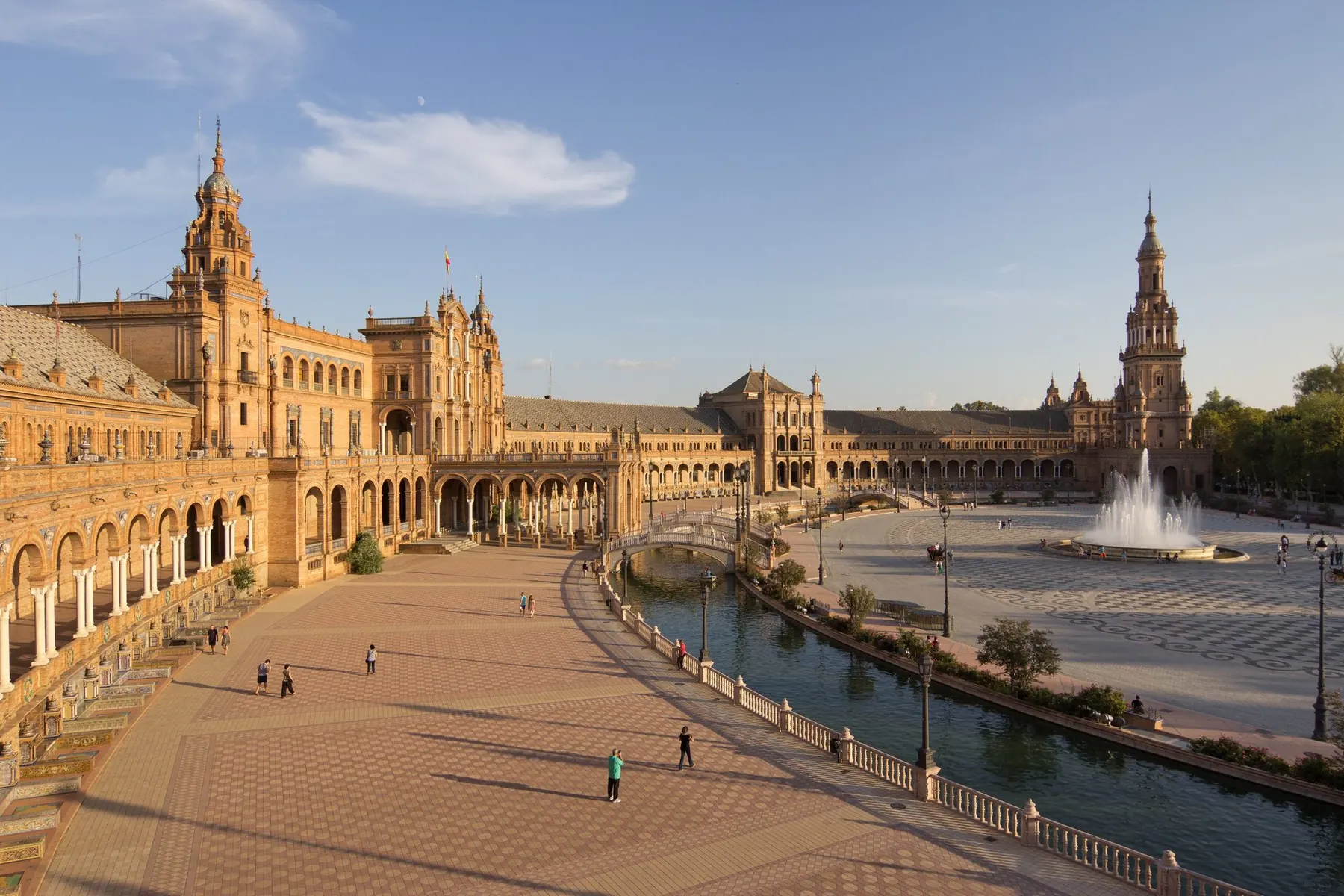
In the morning, walk or drive to the Plaza de España, a sweeping semicircle built for the 1929 Ibero-American Exposition, with tiled alcoves for each Spanish province. Children enjoy the rowing boats on the canal and the shaded María Luisa Park beside it.
Cross the Guadalquivir to Triana, the historic district of potters and sailors. The Triana market, built over the remains of a medieval castle, is a good place for a light lunch. In the evening, consider a flamenco performance in a small, respectful venue, or a sunset river cruise.
Day 4: Seville to Córdoba
The fast train covers the distance in about 45 minutes; by road it is around 1 hour 45 minutes. Leave mid-morning, check in, and visit the Mosque-Cathedral in the afternoon or the following morning, avoiding the busiest hours if you can.
Begun in 785 under Abd al-Rahman I and enlarged over two centuries, the building culminates in the mihrab commissioned by al-Hakam II, glittering with Byzantine-inspired mosaics. A Renaissance cathedral was inserted into its heart in the sixteenth century. It remains an active Catholic cathedral today, so visiting hours are shorter on Sunday mornings and modest dress is expected.
Afterwards, wander through the Judería, the old Jewish Quarter, to the medieval synagogue and the statue of Maimonides, then cross the Roman bridge at sunset for the classic view back to the city. Our Córdoba: Mosque-Cathedral and Jewish Quarter experience can be arranged on request.
Day 5: Medina Azahara, then on to Granada
Eight kilometres west of Córdoba lie the ruins of Medina Azahara, the palatial city founded by Abd al-Rahman III in the tenth century and listed by UNESCO in 2018. Begin at the visitor centre and museum, then take the shuttle up to the site. Plan about two to three hours. The site is normally closed on Mondays, so check the official schedule.
Medina Azahara is outside the city and awkward to combine with a train journey, which is where a private car makes the day easy: visit in the morning, have lunch, and continue directly to Granada, about two hours by road. By train, Córdoba to Granada takes about 1 hour 30 to 1 hour 50 minutes.
Arrive in Granada in time for an evening walk along the Paseo de los Tristes, beneath the illuminated walls of the Alhambra.
Day 6: The Alhambra
Give the Alhambra a full morning or afternoon, without anything else fixed. Arrive at least 30 minutes before your Nasrid Palaces slot, with the original passport or ID used for the booking. A typical order is the Alcazaba first, then the Nasrid Palaces at your time, then the Palace of Charles V and finally the Generalife gardens.
Rest afterwards. In the evening, go up to the Mirador de San Nicolás or the quieter Mirador de San Cristóbal in the Albaicín to see the Alhambra glow against the Sierra Nevada. Our private Granada: Alhambra and Albaicín brings this day together.
Day 7: Albaicín, Sacromonte and departure
Spend the morning in the Albaicín, the old Muslim quarter: steep lanes, walled gardens, the eleventh-century Arab baths of El Bañuelo, and the garden of the Mezquita Mayor, which faces the Alhambra. Continue to Sacromonte, known for its cave houses. Then depart: Málaga airport is about 1 hour 30 minutes by road, and the train to Madrid takes a little over three hours.
Pacing tips for families and couples
- Two nights minimum per city. Changing hotel every night is the main reason Andalusia feels tiring.
- One big visit per day. The Alcázar, the Mosque-Cathedral and the Alhambra each deserve a fresh morning.
- Respect the heat. In summer, local families stay indoors from about 14:00 to 18:00. Do the same and go out again in the evening.
- Choose central hotels with access in mind. Many historic quarters have restricted traffic; check whether a car can reach your hotel door.
- Eat on local time. Lunch from 14:00 and dinner from 21:00. Ask clearly about ingredients; see our guide to Muslim-friendly Spain.
Variations
- Starting in Málaga: reverse the route. Málaga → Granada (about 1 h 30 by road), Granada → Córdoba, Córdoba → Seville, and fly home from Seville or take the train to Madrid.
- Adding the coast: extend by three days in Málaga and Marbella, with a day trip to Ronda.
- Linking with Madrid: begin with two or three days in Madrid and take the high-speed train to Seville.
Train or car with driver?
Trains between these cities are fast and comfortable, and a good choice for light travellers. Families with luggage, travellers who want Medina Azahara or a village stop, and anyone who prefers not to manage station transfers often find a car with driver more relaxing. We design complete custom programmes across Andalusia on request: share your dates and style through the trip planner and the team will propose a route and confirm availability and price after reviewing it.
Questions readers ask
Is seven days enough for Andalusia?
Which order is best: Seville to Granada or Granada to Seville?
Should we use the train or a car between cities?
How far ahead should we book the Alhambra?
Sources
- Renfe — official timetables and tickets
- Patronato de la Alhambra y Generalife
- Real Alcázar de Sevilla — official site
- Mezquita-Catedral de Córdoba — official site
- Junta de Andalucía — Conjunto Arqueológico de Madinat al-Zahra
- UNESCO World Heritage Centre — Alhambra, Generalife and Albayzín
Opening times, ticket rules and fares change. Always confirm on the official site before you travel.