Ronda and the White Villages
A mountain day inland from the Costa del Sol: Ronda's dramatic gorge and bridge, its old Muslim town and Arab baths, and a white village tucked into the rock.
Price on requestWe send a written quote
The Costa del Sol: Picasso's city, Marbella's coast, mountain villages
The Costa del Sol combines Málaga, a cultured port city with Moorish fortresses and major museums, with Marbella's elegant seafront, sheltered beaches and easy trips to Ronda and the white villages.
For many Gulf families, Marbella has been a summer address for decades, and the wider Costa del Sol remains one of Europe's easiest holiday regions: a long, sunny coastline backed by mountains, with good roads, international hotels and a relaxed Andalusian rhythm. But the coast is more than beaches. Málaga, its capital, has transformed itself into a city of museums and restored streets, and within an hour inland lie dramatic gorges, white villages and the clifftop town of Ronda.
The Costa del Sol stretches west from Nerja through Málaga, Torremolinos, Benalmádena and Fuengirola to Marbella, Estepona and beyond. Each stretch has its own feel: Málaga is urban and cultural, the central resorts are lively and family-oriented, and Marbella and its surroundings are quieter, greener and more exclusive. Summer brings long evenings, beach clubs and late dinners; the rest of the year is calmer and ideal for combining coast and culture.
Málaga Centro. The historic centre between the cathedral and the port, with the pedestrian Calle Larios, the Roman Theatre, the Alcazaba and a dense concentration of museums. Picasso was born here in 1881, and his birthplace on Plaza de la Merced is now a museum.
Muelle Uno and La Malagueta. The redeveloped port promenade and the city beach just beyond it, convenient for an evening walk and seafood.
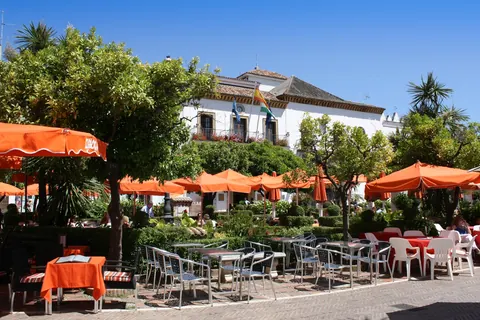
Marbella Old Town. A compact quarter of whitewashed lanes around the Plaza de los Naranjos, with flower pots on every wall and small squares for an evening drink.
The Golden Mile (Milla de Oro). The stretch between Marbella and Puerto Banús, lined with luxury hotels, villas and beach clubs. It is also home to the Mosque of King Abdulaziz, one of the best-known mosques in southern Spain.
Puerto Banús. The marina of yachts, designer shops and terraces, busy late into the night in summer.
Estepona. West of Marbella, a gentler town known for its flower-filled streets, large murals and long beach promenade.
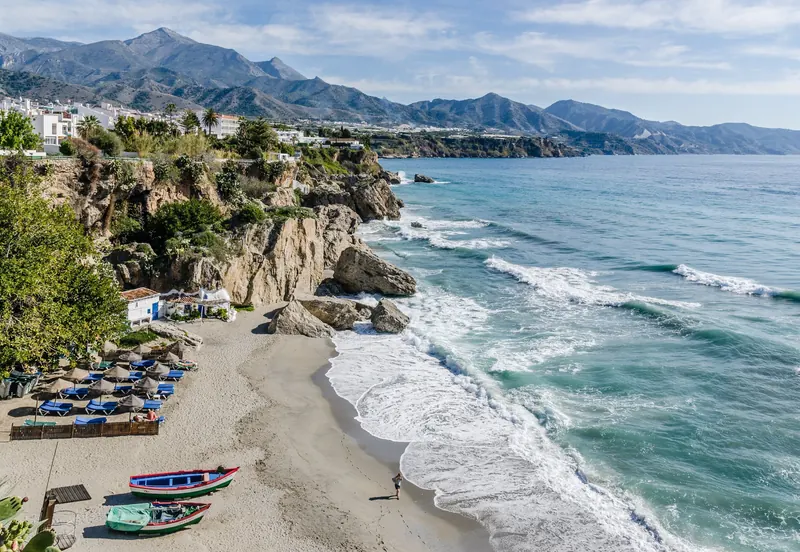
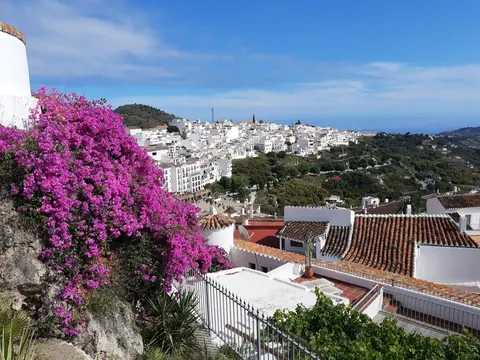
Nerja and Frigiliana. East of Málaga, Nerja's clifftop Balcón de Europa and its famous caves, and the hillside village of Frigiliana with its Mudéjar lanes.
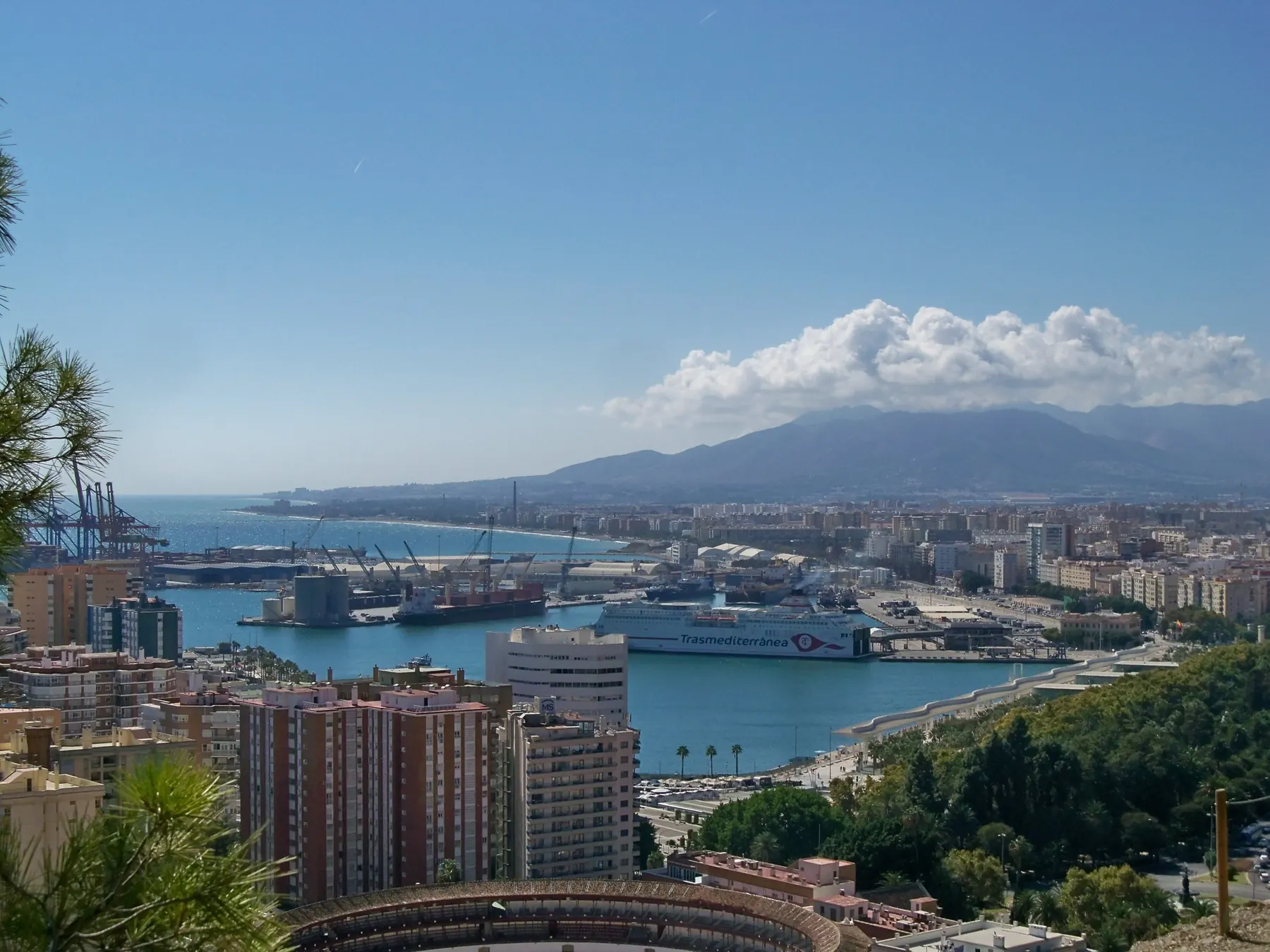
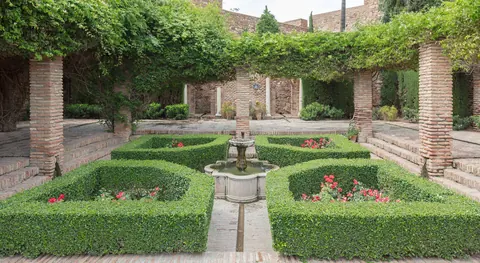
The Alcazaba of Málaga is a palace-fortress built mainly in the eleventh century, during the Andalusi period, climbing a hillside in layered walls, gardens and courtyards. Above it, linked by a walled path, stands Gibralfaro castle, rebuilt in the fourteenth century under the Nasrids, with sweeping views over the port and bullring.
The Roman Theatre, rediscovered in 1951 at the foot of the Alcazaba, shows the city's much older roots.
The Museo Picasso Málaga holds a substantial collection of the artist's work, and the city also hosts the Carmen Thyssen Museum, the Centre Pompidou Málaga in its colourful glass cube by the port, and other galleries, making it one of Spain's most rewarding art cities.
The Atarazanas Market occupies the site of a Nasrid shipyard, whose horseshoe-arched gateway survives; inside are stalls of fish, fruit and spices.
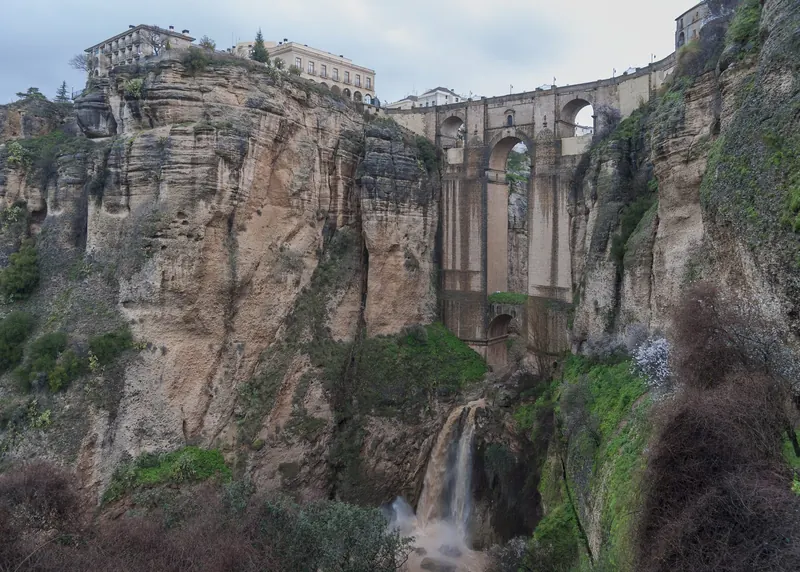
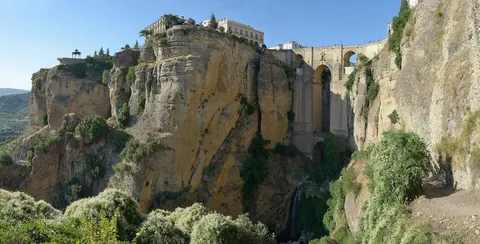
Ronda, about an hour from Marbella by mountain road, is split by the deep El Tajo gorge and joined by the eighteenth-century Puente Nuevo. It also has Arab baths and an old Muslim quarter, La Ciudad. Our private Ronda and white villages day combines it with a village stop.
Málaga's signature is the espeto: sardines threaded on a cane skewer and grilled over a wood fire, often in an old boat set in the sand. Fried fish, grilled prawns and ajoblanco, a chilled almond and garlic soup with Andalusi roots, are summer staples. Inland, the mountain villages are known for almonds, olive oil and sweet Moscatel grapes.
Along the coast you will find a wide range of international cuisine, including Lebanese, Moroccan and Middle Eastern restaurants, particularly around Marbella. Whether a restaurant is halal is something to confirm directly with it; our guide to Muslim-friendly Spain explains how to check certification.
The Costa del Sol is built for families. Beaches are generally calm, promenades are long and flat for strollers, and attractions include the Bioparc Fuengirola, Selwo Aventura safari park near Estepona, Sea Life in Benalmádena and the cable car up Mount Calamorro. In midsummer, plan beach time for the morning and late afternoon, and use the middle of the day for lunch and rest. See our family guide to Spain.
Málaga is the most practical entry point for southern Spain. A classic plan is to arrive in Málaga, spend a few days on the coast, then continue to Granada, Córdoba and Seville before taking the train to Madrid; see our seven-day Andalusia route and the wider Andalusia guide. High-speed trains link Málaga with Madrid, while flights connect it with Barcelona and Valencia.
Málaga's centre is walkable, and a suburban train runs along part of the coast to Fuengirola. Beyond that, the coast is spread out, and Marbella, Puerto Banús, Estepona and the mountain villages are much easier to reach by car. Parking in Marbella and Puerto Banús is tight in summer.
A car with driver is the simplest choice for airport arrivals, for families moving between villa, beach and town, and for evenings out in Marbella without worrying about parking. We arrange airport transfers, a car with driver and day trips on request; share your dates through the trip planner and the team will confirm availability.
A mountain day inland from the Costa del Sol: Ronda's dramatic gorge and bridge, its old Muslim town and Arab baths, and a white village tucked into the rock.
Price on requestWe send a written quote
Save the ones you like to My Trip — we can build your programme around them.
Landmark
An Andalusi fortress-palace on the slope of Gibralfaro hill, with gardens and walkways over the port and the city.
Tip: Go up to Gibralfaro castle for the widest view — or walk down from it.
Viewpoint
An 18th-century bridge spanning the El Tajo gorge, nearly a hundred metres deep, linking Ronda's old and new towns.
Tip: Walk a little way down the viewpoint path to see the bridge from below.
Neighbourhood
White lanes and flower pots around the Plaza de los Naranjos, minutes from the seafront promenade.
Tip: Loveliest in the evening, when the lanes are lit and restaurants open.
Neighbourhood
A white hill village above Nerja, with stepped lanes, purple bougainvillea and traces of its Morisco past.
Tip: The lanes are steep — comfortable shoes are a must.


