Madrid is Spain's high plateau capital: world-class museums, elegant boulevards, leafy parks and a dinner hour that starts when other cities are going to bed.
Madrid does not try to impress at first glance the way Barcelona or Seville can. It wins you over slowly: a late lunch that turns into an afternoon, a museum room you did not plan to enter, a square that fills with families after nine in the evening. Sitting at about 650 metres above sea level in the middle of the peninsula, it is the highest capital in the European Union and the hub of Spain's road and rail network, which makes it the most practical base for a first trip.
The character of the city
Madrid became the seat of the royal court in 1561, and much of what visitors love grew from that decision: the palaces, the grand avenues, the art collections assembled by Spanish monarchs. Yet the city feels more lived-in than monumental. People eat out, walk out and stay out. Weekday terraces are busy, Sunday mornings belong to the Rastro flea market and the Retiro, and the evening stroll (paseo) is a ritual for every generation.
For visitors from the Gulf and elsewhere who are used to late nights, the rhythm feels natural. Shops in the centre usually stay open until 21:00 or later, restaurants rarely serve dinner before 20:30, and summer evenings are the best time to be outside.
Neighbourhoods worth knowing
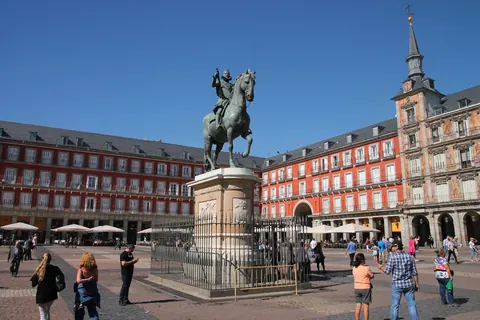
Sol and the Austrias (Habsburg Madrid). The historic core around Puerta del Sol, Plaza Mayor and the Royal Palace. Narrow streets, old taverns, the Almudena Cathedral and the Sabatini Gardens. Walkable and central, but busy.
Barrio de las Letras. Between Sol and the Prado, named after the writers who lived here in the Golden Age, including Cervantes and Lope de Vega. Quotations are set into the pavement of its streets. Good for evening tapas and for staying close to the museums.
Salamanca. A grid of nineteenth-century avenues north of the Retiro, home to Calle Serrano, designer boutiques, embassies and some of the city's most polished restaurants. Its calm, orderly streets and the shopping on its doorstep make it a comfortable base, especially for families.
Chamberí. Residential, traditional and very Madrid: neighbourhood markets, quiet plazas and an authentic feel without the crowds.
Malasaña and Chueca. Young, creative and lively at night, with independent shops and cafés. Better for an evening walk than for a family hotel.
La Latina. The setting for the Sunday Rastro market and for tapas crawls along Cava Baja.
Landmarks and why they matter
The Prado Museum holds one of the world's great collections of European painting: Velázquez's Las Meninas, Goya's Black Paintings, El Greco, Titian and Bosch. Even two focused hours are rewarding if you choose a few rooms in advance.
The Paseo del Arte links the Prado with the Thyssen-Bornemisza (from early masters to Pop Art) and the Reina Sofía, where Picasso's Guernica hangs. In 2021 the Paseo del Prado and the Buen Retiro were inscribed together on UNESCO's World Heritage List as a "landscape of arts and sciences".
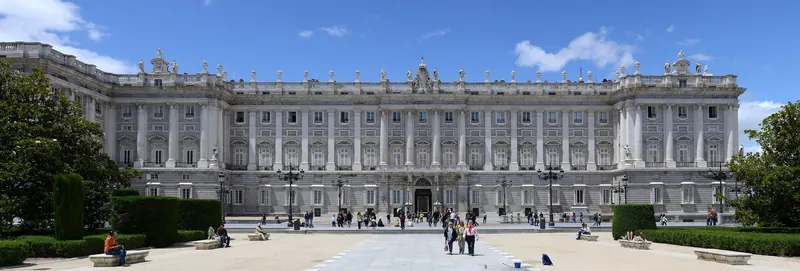
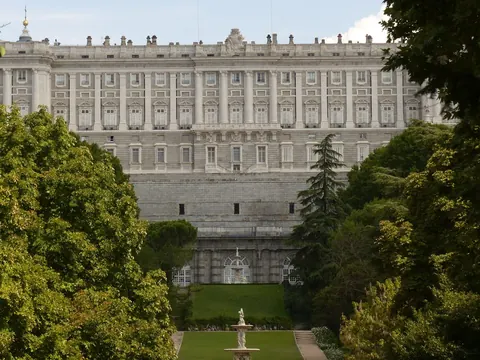
The Royal Palace is the official residence of the Spanish royal family, though they do not live there; it is used for state ceremonies. Its rooms, armoury and views over the Campo del Moro gardens explain how the monarchy shaped the city.
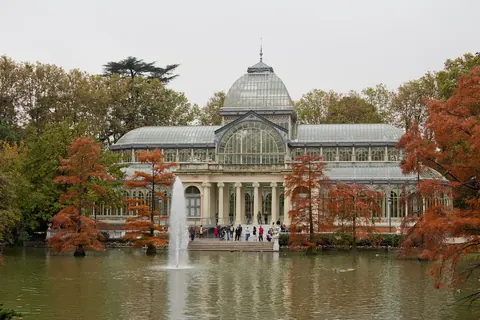
Retiro Park began as a royal retreat and is now Madrid's living room: rowing boats on the great pond, the glass Palacio de Cristal, puppet shows and wide shaded paths that suit strollers.
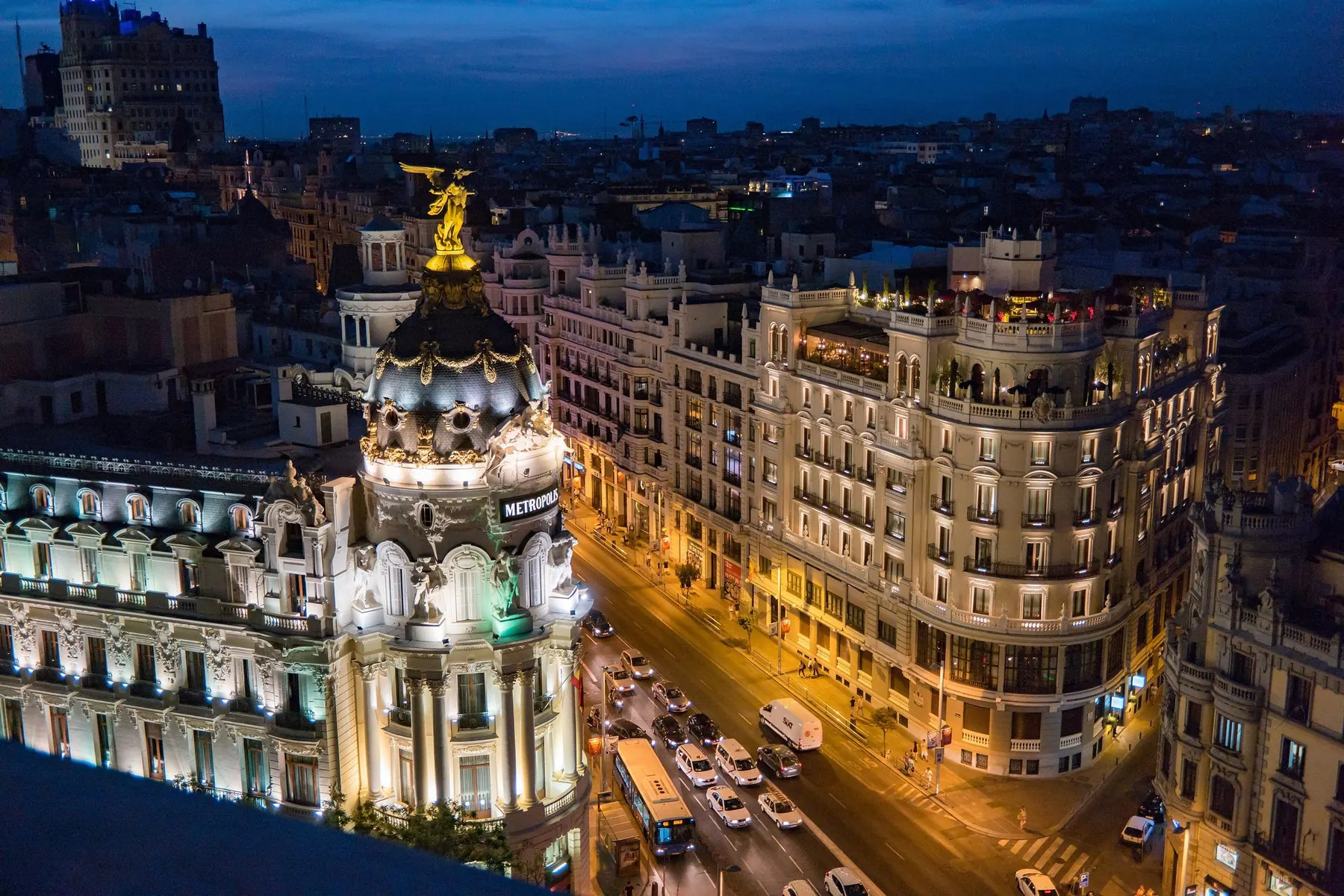
Gran Vía is the early twentieth-century boulevard of theatres, rooftops and flagship stores, best seen at dusk.
Templo de Debod is an authentic ancient Egyptian temple given to Spain in the 1960s, set in a park with one of the city's favourite sunset views.
Football fans will also want to see the Santiago Bernabéu, Real Madrid's renovated stadium, where stadium tours run on non-match days.
Food culture
Madrid's food is generous and social. Classic dishes include cocido madrileño (a slow chickpea stew served in courses), callos, and the famous bocadillo de calamares, a fried squid sandwich eaten near Plaza Mayor. Hot chocolate with churros is a breakfast, a late-night snack and a family tradition.
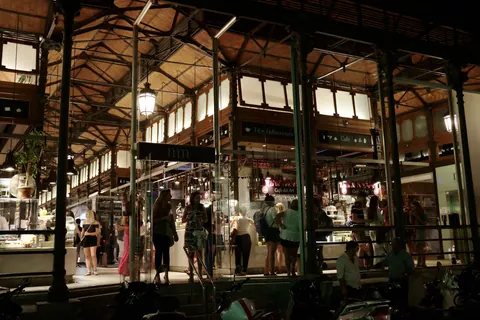
Markets such as San Miguel, San Antón and the neighbourhood market of Chamberí are good for tasting a little of everything. Tapas often contain pork or are cooked with lard or wine, so travellers with dietary needs should ask clearly; our guide to travelling in Spain as a Muslim visitor explains how to check, and Madrid has a long-established Muslim community with mosques and certified food outlets.
Lunch is the main meal, usually from 14:00 to 16:00. Many restaurants offer a weekday menú del día. Dinner starts late, and booking is wise at weekends.
Madrid with children
Madrid is easier with children than many visitors expect. Pavements are wide, parks are frequent and Spaniards are warm towards families; children out at 22:00 in summer are entirely normal. Highlights for younger travellers include the Retiro boats, the Teleférico cable car over Casa de Campo, the Zoo Aquarium, Faunia and the Parque Warner theme park south of the city. Our family guide to Spain covers pacing, heat and car-seat rules in more detail.
In July and August, plan museums and walking for the morning, rest in the hottest hours and go out again after 19:00.
How many days?
- Two days: the Habsburg core and Royal Palace, one great museum, the Retiro and an evening on Gran Vía.
- Three to four days: add a second museum, the Salamanca district and one day trip.
- Five days or more: two day trips, a relaxed shopping day and time to enjoy the city at local pace.
Combining Madrid with the rest of Spain
Madrid works as the opening or closing chapter of most itineraries. Within an hour lie Toledo, Segovia, El Escorial and Aranjuez; see our guide to day trips from Madrid, or arrange a private Toledo day trip or a combined Segovia and Ávila day.
By high-speed train, Córdoba is under two hours away, and Seville, Málaga, Barcelona and Valencia roughly two to three hours, so a classic route is Madrid followed by Andalusia, or Madrid paired with Barcelona.
Getting around
The centre is walkable and the metro is clean, frequent and extensive. Taxis are plentiful and use meters within the city, with a fixed fare to and from the airport for trips inside the M-30 ring road. If you arrive with luggage, children or late at night, our Madrid airport arrival guide compares every option.
Traffic, low-emission zones and parking make self-driving in central Madrid more effort than it is worth. A car with driver is useful for day trips, for families who prefer to move door to door, or for a full day covering several areas without counting metro stops. We arrange airport transfers, a car with driver and private touring on request, such as a Madrid day at your own pace; tell us your dates and style through the trip planner and the team will confirm what is possible.