Valencia is Spain's relaxed third city: a medieval core, the striking City of Arts and Sciences, a nine-kilometre garden in an old riverbed, long beaches and the rice fields where paella was born.
Valencia often surprises visitors who arrive expecting a smaller version of Barcelona. It is calmer, sunnier and easier to manage, with a historic centre that is compact enough to walk, a seafront that feels local rather than touristy, and one of Spain's most distinctive food cultures. It also has a remarkable story of reinvention: after a devastating flood in 1957, the River Turia was diverted, and the old riverbed became a nine-kilometre green park that now links the medieval city with the futuristic City of Arts and Sciences.
The character of the city
Under Muslim rule the city was known as Balansiya, and the irrigation channels that still water the surrounding huerta (market gardens) date back to that period. Every Thursday at noon, the Water Tribunal, an ancient court that settles irrigation disputes, still meets at the door of the cathedral; it is recognised by UNESCO as intangible cultural heritage.
Valencians speak Valencian and Spanish, and the city has a strong festive streak, culminating in Las Fallas each March, when giant satirical sculptures fill the streets before being burned on the final night.
Neighbourhoods worth knowing
Ciutat Vella (Old Town). The historic heart, with the Cathedral, the Plaza de la Virgen, La Lonja and the Central Market. Walkable and full of character.
El Carmen. The oldest residential quarter inside the old walls, known for street art, small squares and the medieval Serranos and Quart towers that once guarded the city gates.
Ruzafa. South of the centre, a lively area of cafés, bakeries and restaurants, popular with younger travellers and locals alike.
Eixample and Pla del Remei. Elegant streets with boutiques, around Calle Colón and Calle Jorge Juan, convenient for shopping and quieter hotels.
El Cabanyal and the seafront. The former fishermen's quarter with tiled façades, close to the Malvarrosa beach and its long promenade of rice restaurants.
Landmarks and why they matter
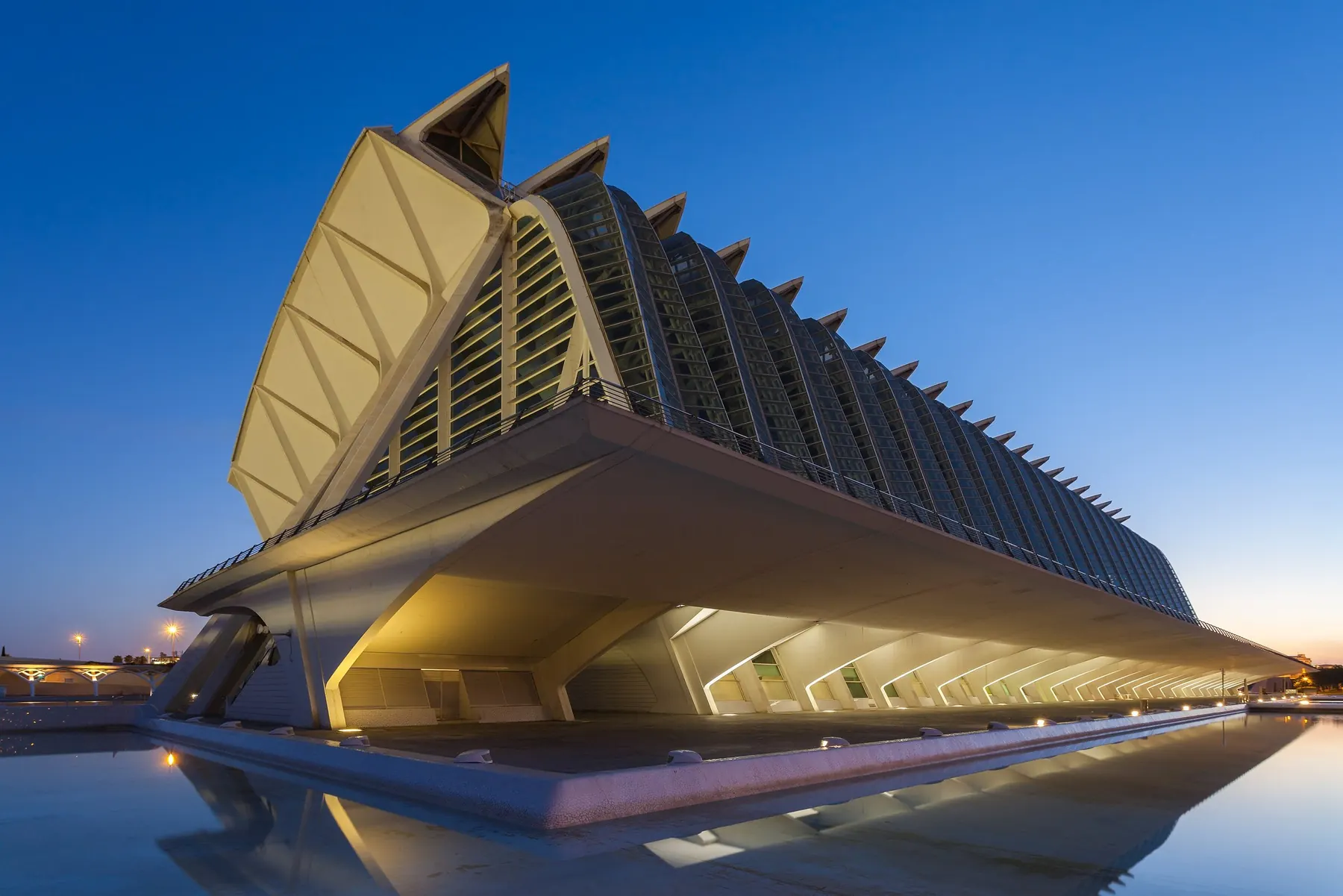
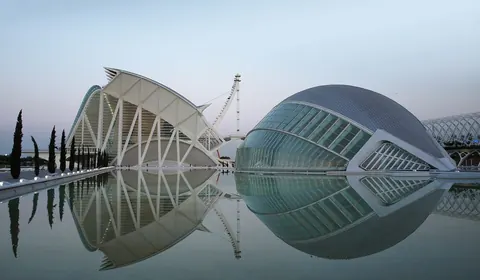
The City of Arts and Sciences, designed largely by Santiago Calatrava, is a sequence of white, organic buildings set in shallow pools: a science museum, a planetarium and IMAX cinema (L'Hemisfèric), an opera house and the Oceanogràfic, a large aquarium whose undersea tunnels are a favourite with families. Even if you go inside only one building, the walk around the complex is memorable, especially at dusk.
The Turia Gardens run through the city for about nine kilometres, with cycling paths, sports fields, fountains and the giant Gulliver playground, where children climb over a figure of the shipwrecked traveller.
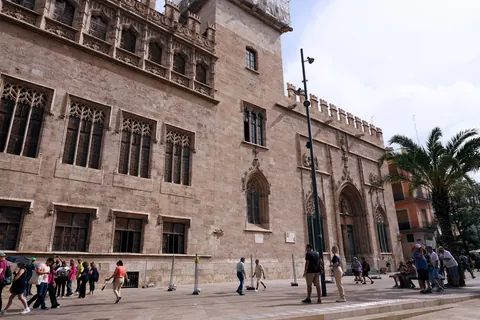
La Lonja de la Seda (Silk Exchange) is a late Gothic masterpiece built for merchants in the fifteenth century, with twisting columns like palm trees. It is a UNESCO World Heritage Site.
The Cathedral mixes Romanesque, Gothic and Baroque styles and keeps a chalice venerated as the Holy Grail. Climbing its bell tower, the Micalet, gives the best view over the old town.
The Central Market is a modernist iron and glass hall, one of the largest fresh-food markets in Europe; come in the morning to see it at its busiest.
Food culture
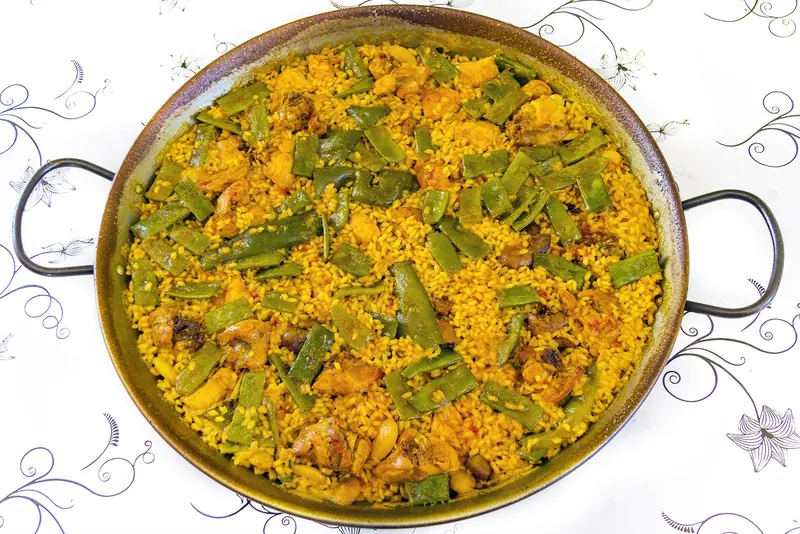
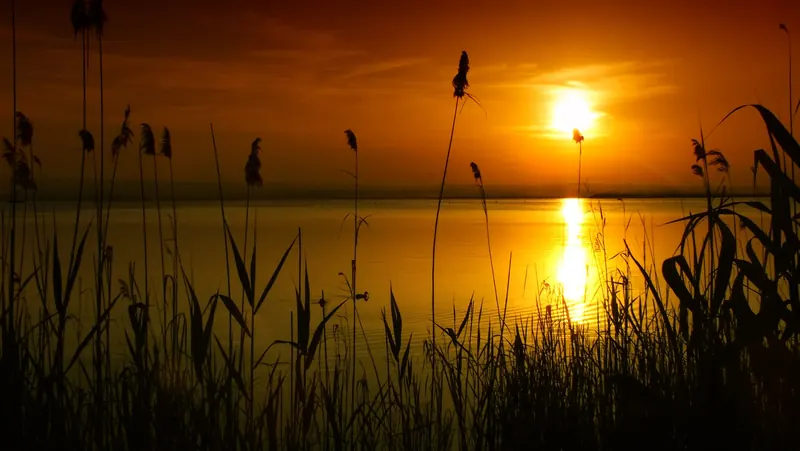
Valencia is the home of paella, and locals are particular about it. The traditional paella valenciana is made with chicken, rabbit, green beans and large white beans, cooked over a wide shallow pan and traditionally eaten at lunch, not dinner. Seafood versions and arròs a banda (rice cooked in fish stock) are equally popular along the coast. The best place to understand rice is the Albufera, a freshwater lagoon and natural park just south of the city, where restaurants in the village of El Palmar serve paella beside the rice fields.
Do not leave without trying horchata, a chilled drink made from tiger nuts, served with long sweet buns called fartons. Ask about ingredients if you have dietary requirements; rabbit, chicken and seafood are the most common proteins, but stocks and fats vary. Our guide to Muslim-friendly Spain explains how to check.
Valencia with children
Valencia is one of Spain's best cities for families. The Oceanogràfic, the science museum, the Gulliver playground, the Bioparc (an immersive zoo focused on African habitats) and long, gently shelving beaches can easily fill several days. Distances are short, the Turia park offers shade and space, and the sea breeze makes summer more bearable than in inland cities. Our family guide to Spain has more on pacing.
How many days?
- Two days: the old town and Central Market, the City of Arts and Sciences, and an evening by the sea.
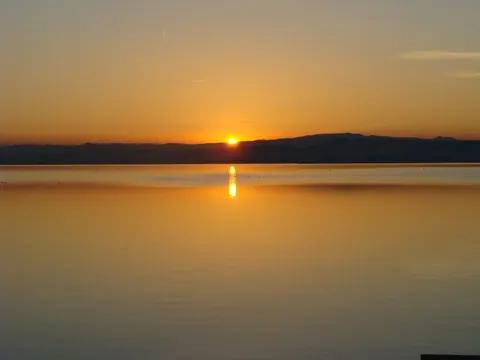
- Three days: add the Albufera with lunch in El Palmar and a sunset boat ride, plus time in the Turia Gardens.
- Four days or more: add a family day at the Oceanogràfic or Bioparc, beach time, or a trip to nearby towns.
Combining Valencia with the rest of Spain
Valencia sits between Madrid (under two hours by high-speed train) and Barcelona (around three hours by train), so it makes an easy middle chapter on a Madrid–Valencia–Barcelona route. To continue to Andalusia, a domestic flight is usually more practical. See our guide to getting around Spain.
Getting around
The old town is best explored on foot, and the metro and tram reach the airport and the beaches. Distances between the old town, the City of Arts and Sciences and the Albufera are short by car but awkward by public transport, which is where a private driver helps, especially with children or in summer heat.
Our private Valencia day: Arts City and the Albufera links the futuristic and the traditional in one day, and we arrange airport transfers and a car with driver on request. Tell us your dates and interests through the trip planner and the team will confirm what is possible.